
Home / Training Ground / Online vs in-person
Getting Started
Online vs in-person personal training: which is right for you?
We coach both, so we have no reason to push you either way. Here is how they really differ, and how to work out which one you will actually stick with.
"Should I get an online coach or a trainer I see in person?" is one of the questions we get asked most. We do both, so we have no reason to push you one way. The honest answer is that they suit different people, and picking the wrong one is the most common reason coaching does not work out.
Here is how they actually differ, and how to tell which one fits you.
The short answer
- Choose in-person if you are new to lifting, coming back from an injury, or you know you will only train when someone is waiting for you.
- Choose online if you already train (or are ready to), want structure and accountability more than supervision, or your week will not fit set appointments.
Everything else is detail. But the detail matters, so here it is.
What you get with in-person personal training
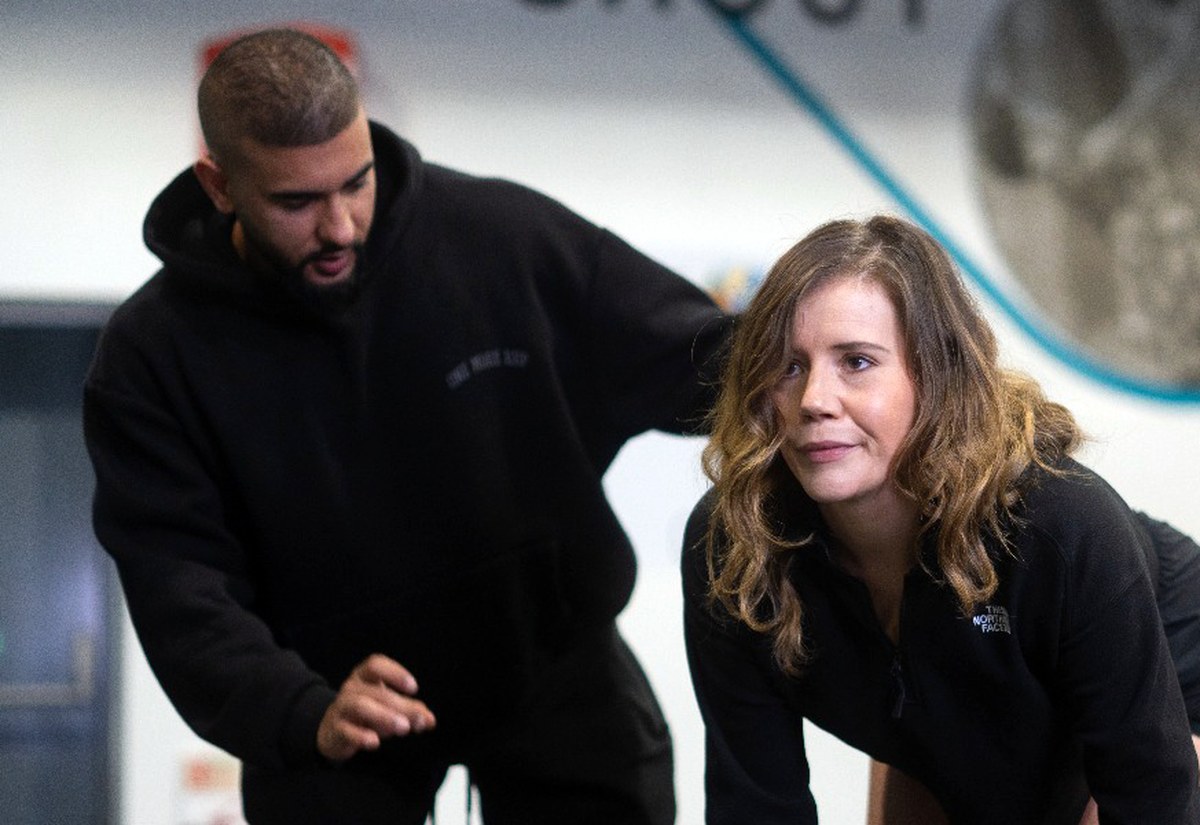
With in-person training, your coach is standing next to you for every set. That is its biggest strength. Technique gets corrected rep by rep, the weights are chosen for you on the day, and there is no way to quietly skip the last set.
It is the best option when the movements are new. Learning to squat, hinge and press well is much easier with someone watching from the right angle and adjusting you as you go. It is also the right call after an injury, when you want someone keeping a close eye while you rebuild.
The trade-offs are time and cost. You train when your coach is available, at their venue. With us that means Diverse Fitness in Hook, and 1-to-1 sessions are £45 each, or £35 a session in a block of 10. Two sessions a week adds up quickly, and the training you do on your own in between is still down to you.
What you get with online personal training
Good online coaching is not a PDF and a pat on the back. Ours includes a plan written around your goal, schedule and equipment, video technique feedback on your lifts, nutrition targets, habit tracking and a check-in every single week where the plan gets adjusted.
What you give up is someone beside you during the session. What you gain is a coach involved in your whole week, not just two hours of it: your food, your sleep, your steps and the sessions you would otherwise skip. You train when it suits you, wherever you are, and it costs from £100 a month.
The questions that decide it
1. Do you know the main lifts already?
If you can squat, deadlift and press with reasonable form, online works well, because filmed technique checks can fine-tune what is already there. If you have never lifted, start in person, even for a short block, then switch to online once the basics are solid.
2. What actually stops you training?
Be honest. If the problem is not knowing what to do, either works. If the problem is that you never quite get round to it, ask yourself whether a weekly check-in is enough of a nudge, or whether you need someone physically waiting for you at 7am.
3. Does your week have fixed gaps?
Shift workers, parents and people who travel for work often find set appointments are the first thing to go. Online lets you move sessions around without losing your coach.
4. Where do you live?
If Hook is a realistic drive, in-person is on the table. If it is not, online gives you the same plan, check-ins and nutrition support from anywhere. We coach online clients all over the UK and abroad.
5. What is your budget over three months?
Compare like with like. Two 1-to-1 sessions a week at our block rate comes to about £280 every four weeks. Online is from £100 a month, with a three-month minimum. Our honest guide to personal trainer costs goes into this in more depth.
The option most people do not think of: both, in order
A route that works well for a lot of people: start in person to learn the movements properly, then move to online once you are confident training on your own. You keep the same coaches, the same plan and the same accountability, and the monthly cost drops. It is the route we recommend to most beginners who want to train long-term.
If you are pregnant or postnatal, Haaroon holds a pre and postnatal exercise qualification and adapts online plans around you. If you are unsure which fits, that is exactly what the free consultation is for.
Online vs in-person: questions
Is online personal training as effective as in-person?
It can be, for the right person. If you already know the main lifts and you need structure, nutrition guidance and accountability more than someone beside you, online coaching gets results. If you are new to lifting or rebuilding after injury, in-person is usually the better start.
How much does online personal training cost compared with in-person?
With us, online personal training is from £100 a month with a three-month minimum. In-person 1-to-1 sessions are £45 each, or £35 a session in a block of 10, so two sessions a week costs around £280 every four weeks.
Can I switch from in-person to online later?
Yes, and many people do. Starting in person to learn the movements, then moving to online once you are confident, keeps the same coaches and plan while lowering the cost.
Related reading
More from the Training Ground.
How to choose a personal trainer: the complete UK guide
Qualifications, red flags, 25 questions to ask, and how to pick between 1-to-1, small group and online.
Read moreHow much does a personal trainer cost?
An honest look at UK prices, what changes them and how to get the best value.
Read more